
Insights
Answer-first content for enterprise leaders.
Perspectives on moving AI from ambition to operation — written for CEOs, CTOs, CIOs and operators who need clarity, not hype.
Why Syntamatic · For every company size
How our insights works for your organisation
Whether you run a global enterprise, a scaling mid-market business, or a focused SMB — Syntamatic designs delivery, governance and technology to match how you actually operate.
Fortune & regional enterprises
AI-embedded systems for complex operations
Governance, architecture and production AI operating models for complex organisations.
- Architecture-first delivery with accountable SLAs
- Private AI, RAG and agent systems under your control
- Integration across ERP, data and workforce platforms
Market analysis
Leaders are drowning in AI content — starving for operating advice.
Our editorial bar: answer the decision, name the trade-offs, and connect technology choices to business performance.
Ambition outpaces operations
Board-level AI mandates collide with fragmented data, brittle integrations and unclear ownership.
Risk without control is a non-starter
Enterprises need private options, audit trails and guardrails — not experimental chatbots in production.
Value must be measurable
We design initiatives around cycle time, cost-to-serve, risk reduction and revenue leverage — not demos.
Illustrative industry pattern for narrative context — not a proprietary Syntamatic benchmark claim.
Where enterprise AI programmes typically stall
What to Look for in Pharmaceutical LIMS Software
Selecting a modern Laboratory Information Management System (LIMS) is no longer a matter of basic sample tracking. For pharmaceutical manufacturers, CDMOs, and analytical labs, a contemporary LIMS must serve as an active system of compliance, bridging instrument telemetry directly into automated deviation reviews and Qualified Person (QP) release workflows.
LIMS vs eQMS vs RIMS: Key Differences for Pharma Companies
Pharmaceutical operations rely on three distinct operational systems of record: Laboratory Information Management Systems (LIMS), electronic Quality Management Systems (eQMS), and Regulatory Information Management Systems (RIMS). Understanding how they interact — and where data must flow freely between them — is essential for avoiding regulatory release bottlenecks.
How to Digitize Pharmaceutical QC Lab Workflows
Digitizing a pharmaceutical Quality Control (QC) laboratory requires more than scanning paper documents into PDF format. It demands structured, interactive digital workflows that guide analysts through validated testing steps, validate inputs in real time, and enforce compliance automatically.
HRMS Implementation Checklist for Mid-Sized Businesses
Mid-sized organizations (200 to 2,000 employees) face unique challenges when replacing fragmented spreadsheets with an enterprise HR platform. This practical checklist provides a step-by-step roadmap covering data cleansing, statutory payroll rules, manager self-service adoption, and AI workflow automation.
Enterprise AI Agents: Integration, Governance and Human Approval
While consumer AI chatbots operate on open-ended conversational prompts, enterprise AI agents execute transactional work: modifying database records, reconciling financial ledgers, and triggering ERP events. Building production-grade agents requires rigorous state machines, strict retrieval boundaries, and mandatory human-in-the-loop review gates.
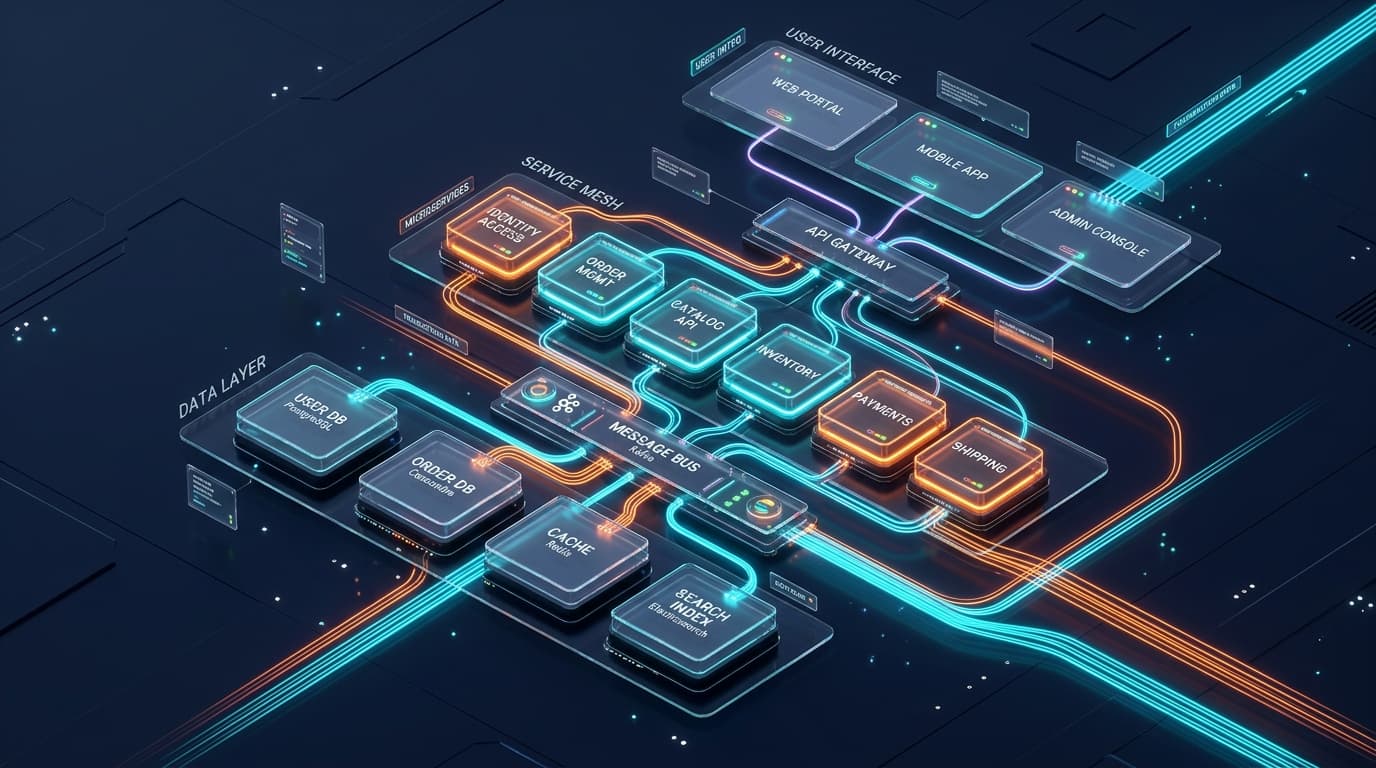
Custom Software vs Off-the-Shelf Enterprise Platforms
The traditional binary between "100% custom-built software" and "rigid off-the-shelf software packages" is obsolete. In 2026, progressive CIOs adopt an composable platform model: deploying proven, pre-architected core engines while engineering proprietary custom layers around unique operational differentiators.
Move AI From Ambition to Operation.
Tell us about your enterprise, your priority and your timeline. We will route your request to the right industry and capability lead — and respond with a clear next step.